Branding, Communication, Marketing, Strategy
Have you noticed an uptick in messages about self-love and acceptance these days? You know, the messages encouraging you to embrace who you are and what makes you different; to really own it. It’s a nice way of saying quit trying to be someone you’re not! In marketing, as we continue to work on personifying brands, it’s not a stretch to carry over that mentality.
Are you owning your brand or struggling in the identity department? Let’s do a little self-diagnosis.
Here are three signs you have a brand identity problem:
Your answer to “What do you stand for?” changes depending on who is asking.
You make marketing decisions based on what’s trendy rather than brand strategy.
You have a lukewarm relationship with your target audience.
If any of these questions strike a chord, it’s time to go back to basics with your brand. It’s not an insult or a sign of weakness; major brands regularly revisit their strategy to evaluate and adjust for maximum effect. This will get you back on track and ahead of those who are too proud to admit they have a problem.
There are many more elements to building up a wow factor, but these are the ingredients for a strong foundation.
Brands, like people, grow and develop over time. They need constant assessment to understand what they stand for over the years or else they will become outdated and unrelatable.
- Be sure of your values and target audience, and be mindful of just how those two things overlap.
- Understand the needs of your audience and how they wish to be reached.
- Present yourself consistently in terms of messaging and frequency.
Make your Marque
What happens when you get to the point where you own your brand? You aren’t hiding behind anything and you aren’t trying to imitate others. You are no longer worried about pleasing every person on the planet, because you know that is just not going to happen. (Really, it’s not.) Instead, you know that by owning your brand, you’ll attract people that value what you value.
Branding, Marketing, Strategy

The definition of the term “brand” or “branding” has been debated on for many years. What began as a company name, slogan, and logo has become a complex marketing strategy that defines who you are and what your company represents. Good branding increases the overall value of a company, provides direction, and makes working with other businesses easier. So, what’s stopping you?
IDENTIFYING A BRAND
Deciding on the direction of your brand can be intimidating and very time consuming. It is easy to get stuck on a specific idea for your brand that might not be the best option. This is when it’s beneficial to step back and look at your company from a consumer’s standpoint. Consumers decide whether your brand is worth remembering, so their opinion is key in the development process.
- Identify your positioning.
- Establish company values.
- Determine target audience.
- Where do all of these develop? That is your brand.
CREATING A BRAND BOARD
Putting together a brand board for your company is arguably one of the best ways to develop a visual brand. Brand boards allow you to lay out all aspects of your company so that they are accessible to your employees. They also serve as a reference point when working with other companies, ultimately ensuring consistency and error-free work. Sometimes when something is laid out, it is easier to see elements that don’t belong, or cause friction instead of harmony.
 When designing a basic brand board, we are always sure to include:
- Logos & Tagline – Including all renditions and how to properly apply them.
- Colors & Elements – Including Pantone colors if applicable, and any design elements like patterns, textures, or other visual motifs.
- Fonts – Including body, title, and accent text.
- Photography – Including photos that are regularly used, providing a few examples of the style and mood to help with maintaining consistency.
IF YOU’VE GOT IT, FLAUNT IT
Once you’ve developed a brand, it is important to get people talking about it. People love to tell their friends about the brands they like, but they can’t tell someone about a brand they can’t remember. That said, do you ever wonder how companies show up out of the blue and suddenly become the only thing anyone can talk about? Well, besides being in the right place at the right time, there is a strategy behind this mysterious phenomenon:
- Create an awesome website
- Have a strong social media presence
- Be unique
- Build relationships with your customers
- Know your brand and stay committed to it
REMEMBER
A strong brand is crucial to generating referrals and creating viral traffic, but proper decision making is critical in its success. We all know of a company that offers great products or provides excellent services, but has a tarnished brand due to poor decision making. Don’t be one of those companies. Take the time to identify a brand and maximize its potential.
Strategy, Marketing
There has been a host of articles in the news over the last couple of years about the number of things that millennials have killed. Most recently, according to Business Insider, they took deadly aim at Applebees and Buffalo Wild Wings.
Other things millennials have been accused of killing include, but are not limited to:
Let’s Get Real
Okay, listen, millennials didn’t kill any of these products or businesses. They killed themselves. Death by marketing suicide.
You must know your target market. You must research, identify and understand your ideal client, and then market to them. If you don’t, they aren’t going to buy your product, solicit your services, or engage your business. It’s that simple. And if you fail to do that, for goodness sake, don’t blame them.
Millennials aren’t really any different than any other generation that has come before them. You need to put the work into figuring out their wants, needs, and desires. You need to research their buying habits and their impulses.
(And….pssst….trade secret: your target market is constantly changing!) If you assume your target market is the same that it was ten years ago, you are probably missing out on some revenue opportunities.
Marketing isn’t Static
 That’s why marketing is a constant evolving machine. You should create new marketing plans each and every year and regularly evaluate the return on your investment. Data can drive your decisions and that includes researching your target audience often.
Your target market is spending its hard-earned dollars on something – don’t let your competition figure out how to earn their attention before you do.
Branding, Marketing, Social Media, Strategy

Looking back on what people thought 2017 might look like 100 years ago, most people probably imagined flying cars or teleportation. I think it’s safe to say that didn’t happen. Instead, we reinvented something even more amazing: rompers for men.
Yes. You read that right.
 For those of you who have never heard the word “romper” before, a romper is a one-piece garment that looks similar to a dress but has shorts below the waste instead of a skirt. They are as convenient as they are fashionable, a true American treasure.
The newest clothing line called RompHim, by ACED Design, was launched last week as a Kickstarter campaign. The four male founders set a goal of raising $10,000. Clearly, they underestimated the demand for chic male onesies, because they surpassed their goal by over $355,000. Not too bad for still having 21 days left in the campaign. Bravo, gentlemen.
Been there, done that.
The Kickstarter pledging process is simple, but unique. Unlike the old school, magazine-ordered bodysuits, RompHim customers can choose their price. Starting at $5 and capping off at $1,250, the company offers anything from online updates, to the opportunity to hand select your own RompHim fabric. Your $1,250 pledge also buys you a night on the town with the ACED Design team, making your evening as unique as the onesie you rode in wearing.


Tweet about it.
Twitter seems to be the social media platform of choice for both praise and disapproval, resulting in several millions of #RompHim tweets. Whether people see it as a fashion statement or a frat-inspired gag gift, it doesn’t matter. Either way, the tweets and memes are considered “the best thing on Twitter”, and I have to agree.

Two thumbs up!
So where does that leave me? Besides paying $1,250 to go on a bro-date with the founders, I think RompHims are fantastic. Anything that can make me laugh out loud and still look that good has my vote. Also, I’m quite pleased that men will finally understand the struggle of having to completely undress to use the restroom.
As for the next 100 years, I can only hope that men will still be coming up with ways to masculinize products that were originally designed for women. That said, I’m all for gender equality, but some things are better off unaltered. They can have their Mandles, Brogurt, and RompHims, but I’d like to keep my high heels and over-priced handbags.
Strategy, Communication, Marketing, Public Relations, Social Media
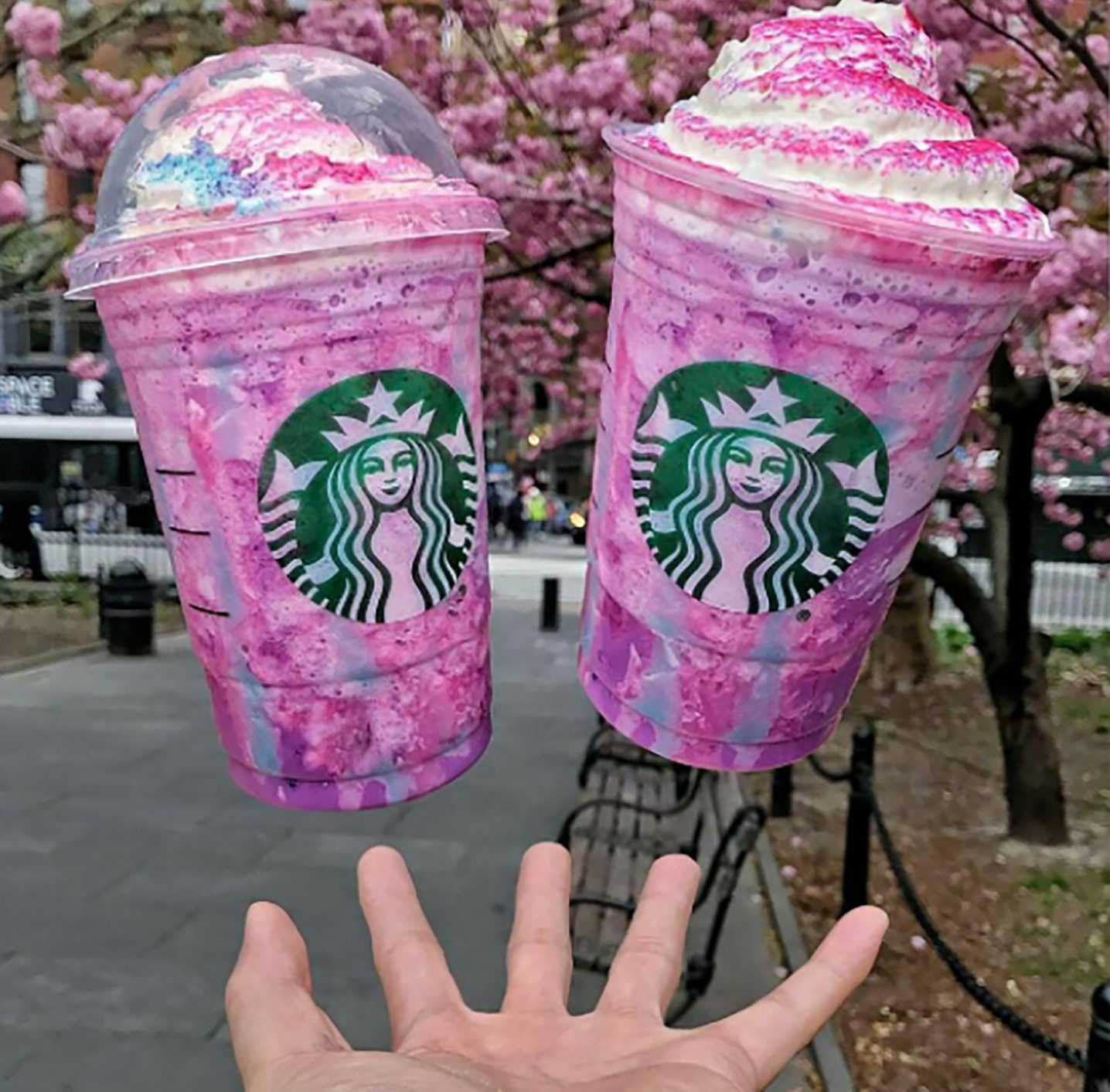
The age of posting excessive pictures of your fancy drinks and fun foods on social media has arrived. Since the dawn of social media, people have captured photos and posted them online for the world to see. But now, everywhere you turn someone is seeking the perfect lighting for a picture of the newest vegan soup, or for the case of this discussion, the newest Starbucks drink.
But I love Starbucks…
There is no denying that Starbucks is dominating the Café industry, but have they gone too far? The new Unicorn Frappuccino went from an internet sensation to a controversial lawsuit in a matter of weeks. The globally desired drink hit the shelves on April 19 and was said to be a limited time offer. Limited time offer…brilliant. Not only did they develop a drink that was social media gold, they scheduled it so that everyone would have to try it before it was too late. Even the customers who were unable to get their hands on one turned to social media. Only this time to vent their frustration. I guess it’s true what they say, there’s no such thing as bad publicity!
 PR specialists explain that the Unicorn Frappuccino was inspired by unicorn-themed food and drinks trending on social media, unicorn emojis, and the unicorn filter on Snapchat. Brooklyn café, The End, had a different opinion, saying that Starbucks ripped-off their already established drink called the Unicorn Latte. The End began selling the Unicorn Latte in December of 2016, and has had a pending trademark for the drink name since January of 2017. That said, The End isn’t the only small business with a unicorn-inspired drink on their menu. This mythical creature is truly taking the social media world by storm #magic.
The interesting thing about these trends is that companies often leave the marketing up to the consumers. Why dump millions of dollars on social media campaigns when your customers will go online and do it for you? Aside from the initial announcement of the new product, companies get to sit back and watch as we upload endless posts, making their product a desirable fixation.
Take away the sparkles and what are you left with?
As a millennial, I too have developed a love for social media. I’ll even share the occasional photo of decadent cocktails or colorful cuisine that I come across. The one thing I don’t understand is the obsession over these trends, especially when people don’t actually enjoy the product. Most folks who purchased the Unicorn Frappuccino said they didn’t like the taste, claiming it tasted like sour milk.
There’s nothing magical about sour milk. I don’t care how sparkly or mystical it looks, if it tastes like dairy-gone-bad we should be tagging it the #DirtyDonkeyFrappe.
Strategy, Marketing
Does your business have a marketing plan?
Come on, be honest. It’s okay if you answer no. I think you’d find yourself in good company. According to latest survey done by Manta, less than half of all small business owners have a marketing plan. Why? Well, I’m sure you know the answer to that one as well. Small business owners are overloaded with work and stretched too thin to dedicate either time or resources to creating a marketing plan.
But you should. A marketing plan should be a part of your greater business plan (complete with an operating budget) and should be updated often, or at the very least annually.
Let me tell you why.
 Have you ever gone to Disney World? If so, you know that a good trip requires good planning. Whether you hire a professional (like a travel agency or a travel planner) or you plan it yourself, it’s a significant time investment.
You make your resort and travel reservations almost a year in advance. Six months ahead, you make your dining reservations (and you do so quickly as the hot venues fill up fast). You plan which days you are going to visit which parks, taking in account the extra magic hours, parades, and fireworks.
If you don’t plan for your trip, could you still go to the most magical place on earth? Of course you could. But that trip would be expensive. Without planning ahead and reserving your accommodations and travel arrangements in advance, costs could be almost three times as much as if you had planned effectively. You wouldn’t be able to eat at the dining locations of your choosing – those venues fill up with reservations very quickly. You wouldn’t be able to get tickets to special shows and events. You may go to the wrong park on the wrong day and miss something special (like a parade or fireworks).
Would you still have an enjoyable time? Probably. It is Disney World, after all. But you would be throwing money out of the window, based on necessity and emergent situations and wouldn’t be getting the most out of your trip.
The same is true about creating a marketing plan.
Yes, it takes a lot of time and effort to make it happen. Sometime, you need to bring in the professionals. But the planning pays off. You are going to spend less, do more, and get the most return out of that investment. And that? That is magical.