
3 Brands That Nailed End-of-Summer Marketing
The end of summer creates an interesting window for brands. It’s a transitional moment when audiences are still engaged with the season, but attention is already starting to shift toward what’s next. The brands that use that space well tend to feel intentional, culturally aware, and ahead of the curve rather than simply seasonal.
Rhode, DoorDash, and Liquid Death all did that this summer, in three very different ways.
Rhode: Turning a Trend Into a Brand Experience
Rhode took one of summer’s biggest aesthetics off the screen and put the brand directly inside it.
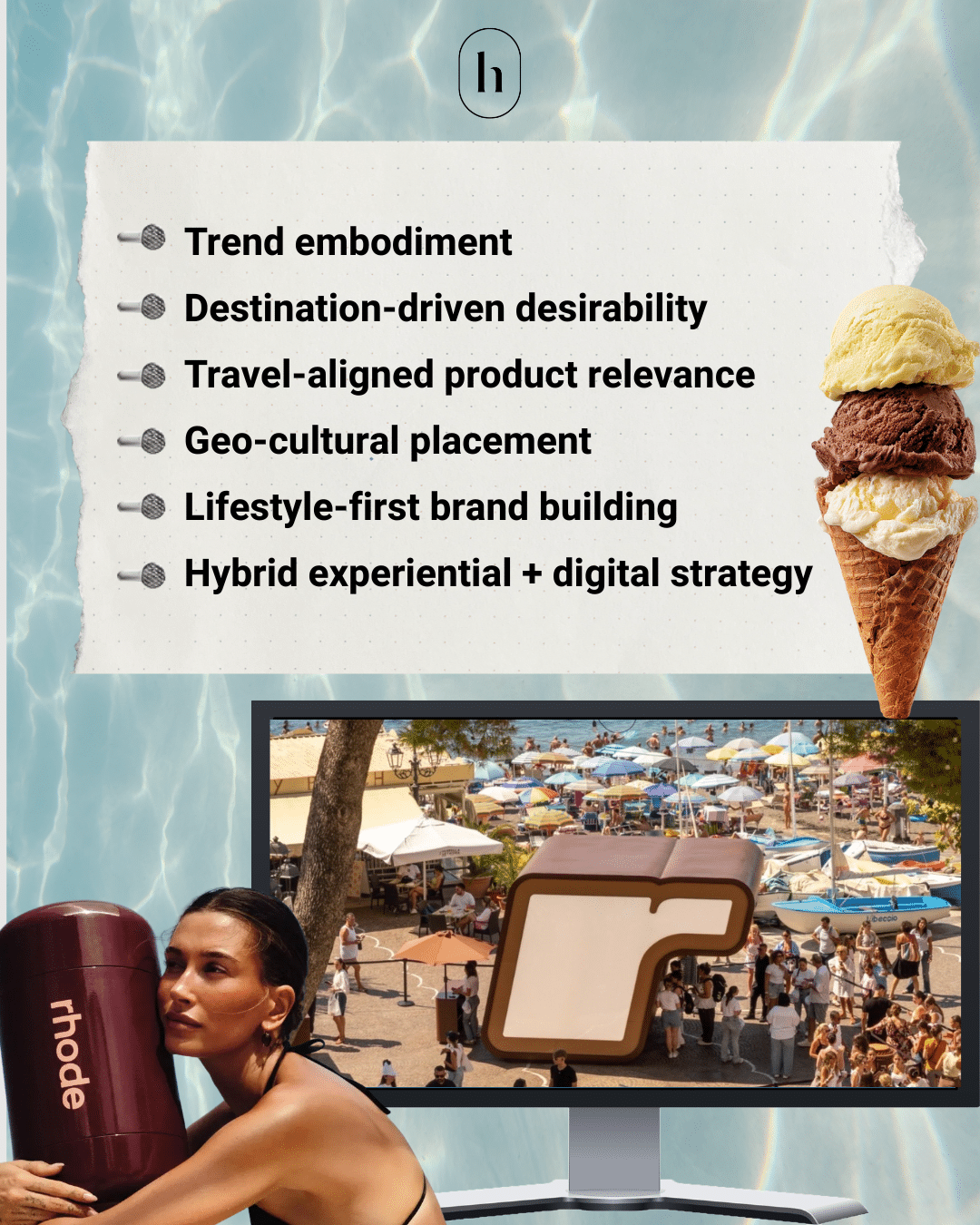
With a curated pop-up on the Amalfi Coast, Rhode tapped into the highly aspirational “Euro Summer” trend in a way that felt completely natural for the brand. The activation brought together product sampling, limited-edition travel sets, photo-ready installations, and influencer appearances, all within a destination already associated with beauty, leisure, and luxury.
The important part wasn’t simply choosing a beautiful location. It was choosing one that reinforced the world Rhode has already built around its brand.
Why it Worked
Rhode didn’t just reference a trend. It became part of it.
The Amalfi Coast gave the campaign immediate cultural relevance, but the connection went deeper than aesthetics. Rhode’s compact, minimalist products made sense within a travel setting, while the destination reinforced the lifestyle the brand already sells.
It was also an experience built to extend well beyond the people physically attending. The setting, installations, products, and creator involvement all created content that could continue circulating through Instagram, TikTok, and other social channels.
That combination turned a temporary activation into a much larger brand moment.
Our take: Trends are most useful when they already have a natural connection to the brand. You don’t need to chase every cultural moment. You need to know which ones you actually have permission to play in.
DoorDash: Using Timing to Stand Out in a Crowded Category
Food delivery is not exactly a category short on competition.
Instead of leading with another message about speed, convenience, or what you can order, DoorDash went in a different direction.
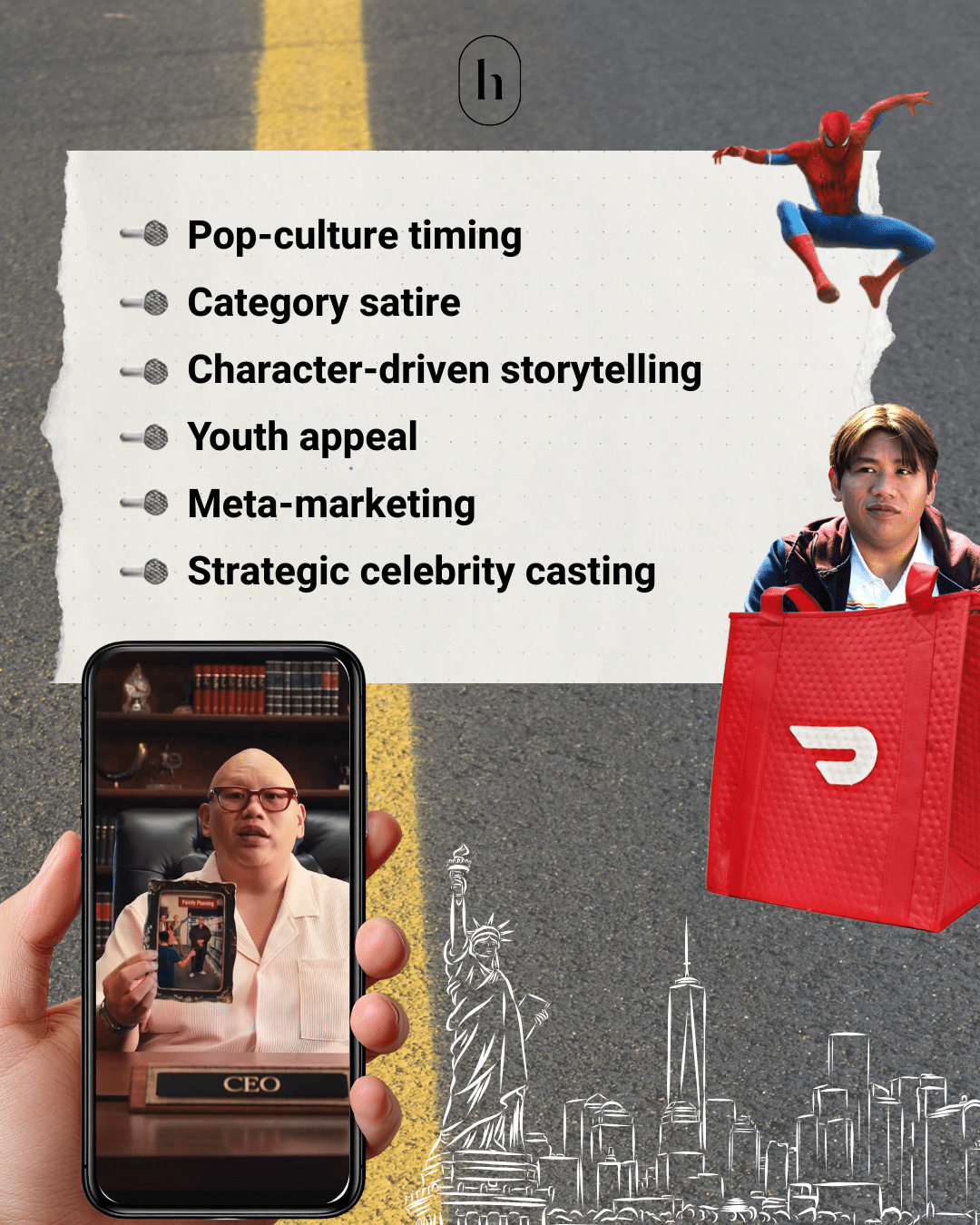
The brand cast Jacob Batalon, widely recognized for his role in the Spider-Man franchise, as the fictional “Cringe Mart CEO.” The character leaned into the chaos of delivery culture through self-aware humor, giving the campaign a personality that felt intentionally different from the category around it.
The timing helped, too. The campaign arrived as attention around Spider-Man was building, allowing DoorDash to tap into an existing cultural conversation without making the entire idea depend on it.
Why it Worked
Celebrity casting alone doesn’t make a campaign interesting. The role the celebrity plays matters.
Batalon wasn’t simply appearing as himself and endorsing DoorDash. The campaign gave him a character and built a concept around him. That created something audiences could recognize, understand, and remember.
It also gave DoorDash a way to differentiate itself without needing to directly compare features with competitors.
The brand used humor, storytelling, and cultural timing to make a familiar service feel more distinctive.
Our take: Relevance isn’t just about attaching a recognizable name to a campaign. The better question is whether the person, timing, and idea work together to make the brand more memorable.
Liquid Death: Making the Unexpected Feel Completely On-Brand
Liquid Death has never built its brand by behaving like a traditional beverage company.
Its collaboration with Garage Beer continued that strategy, bringing Jason Kelce into an ad centered around an unlikely topic: cooling data centers.
The concept combined several conversations already getting plenty of attention, including AI, growing concerns around data center infrastructure, Kelce’s expanding cultural visibility, and Liquid Death’s established taste for absurdity.
Water. Beer. Technology infrastructure. Jason Kelce.
Not exactly the most obvious combination.
And that’s part of why it worked.

Why it Worked
Liquid Death has spent years building a brand that gives it permission to approach topics differently. Its humor, irreverence, and willingness to play with cultural conversations are already recognizable parts of its identity. That foundation matters.
An unexpected idea can earn attention, but if it has no connection to the brand behind it, the attention doesn’t necessarily go anywhere. Liquid Death can push an idea further because the execution still feels unmistakably Liquid Death.
Jason Kelce’s cultural momentum added another layer of relevance, while the data center angle gave the absurdity a connection to a real conversation happening around AI and infrastructure.
Our take: Being unexpected works best when people can still tell exactly who is behind the idea. Strong brands earn more room to experiment because their point of view stays recognizable.
What These Brands Got Right
At first glance, these three campaigns don’t have much in common.
One created an aspirational experience on the Amalfi Coast. One built a fictional CEO around a celebrity. One found a way to connect beverages, AI infrastructure, and Jason Kelce.
But strategically, they’re doing something very similar. They’re paying attention.
Rhode understood the lifestyle its audience was already romanticizing and found a credible place for the brand within it.
DoorDash understood that competing on functionality alone wasn’t necessarily going to make people pay attention, so it created something with personality.
Liquid Death understood which cultural conversations it could stretch into without losing what makes the brand recognizable.
That’s what strong seasonal marketing looks like. It’s not about finding a reason to post because the calendar says summer is almost over. It’s about understanding the moment, knowing what makes sense for your brand, and doing something with it that feels intentional.
Because relevance can get you into the conversation. Strategy is what makes people remember who showed up.